Overview: Some people have naturally straight teeth, but most of us will have some kind of misalignment, ranging from mild to severe. Teeth will move into the easiest possible position, and this isn’t always perfectly straight and aligned.
Thankfully, there are treatments available to help move the teeth and create a more visually perfect smile. Orthodontic treatment is not only for creating a more aesthetically-pleasing smile, but also for correcting bite issues. This can help to address issues like uneven wear and tear and chronic jaw and neck pain.
Orthodontic treatment can start at any stage of life, so it’s not just for teenagers. If you’re curious about getting started with orthodontics, read on to learn more about the options available to you for achieving straighter teeth.
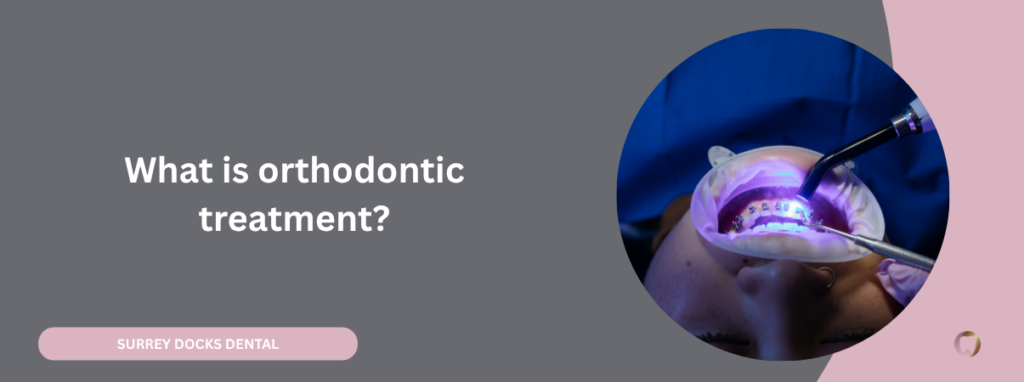
What is orthodontic treatment?
Orthodontic treatment is a specialist branch of dentistry concerned with the way the teeth are aligned. Braces and aligners are used to apply pressure to the teeth and move them into the correct alignment.
This usually takes place over months or years, as the supporting tendons and tissue need to be able to keep up with the movement. If the movement happens too quickly or suddenly, there is a risk of damaging the teeth, and the treatment would also be very uncomfortable.
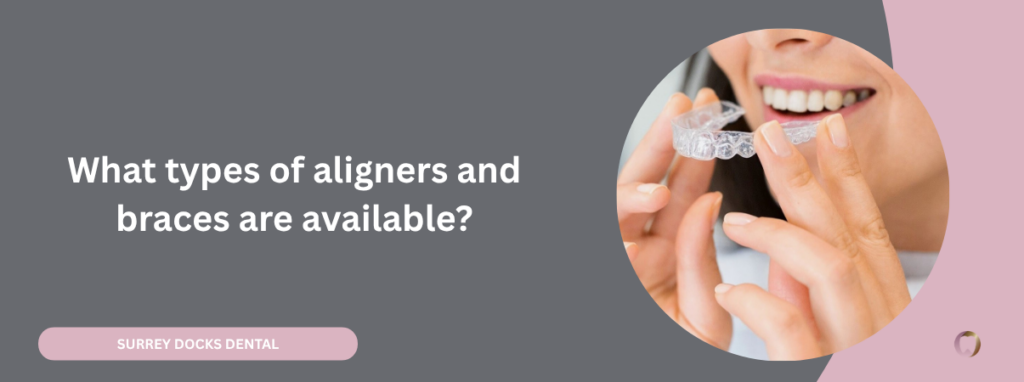
What types of aligners and braces are available?
When people think of orthodontics treatment, most will think of the fixed metal braces that are available on the NHS. Today, there are lots of new treatment options available, including much less visible and intrusive options. The most popular types of orthodontic systems include:
Invisalign clear aligners
Invisalign is the market leader for clear and removable aligners. Rather than using brackets and wires, this system uses a set of clear plastic aligners that are custom designed for each patient.
These fit over the teeth and then apply gentle and strategic pressure to the teeth. As the patient moves through the sets of aligners, their teeth get closer and closer to perfect alignment.
This treatment plan is popular as the aligners can be removed to eat and drink. Since the aligners are nearly invisible, it’s also a very discreet treatment plan, which can be helpful if patients are self-conscious about wearing braces.
Traditional fixed braces
Traditional fixed braces are a popular alternative to clear aligners as they can offer more simple treatment plans. Patients don’t have to worry about removing their braces for every meal and every drink.
With traditional braces, we attach a bracket to each tooth and then run a wire between these brackets. Changing the tension on the wire allows us to apply strategic pressure to the teeth. The patient visits the dentist for regular adjustments, which means the treatment is much more responsive.
Metal braces are the most common choice, but there is also the option to use tooth-coloured brackets with clear wires to make the treatment more discreet.
Lingual braces
Another alternative to traditional fixed braces is lingual braces. These work the same, except the brackets and wires are fitted to the backs of the teeth. This makes for a more discreet treatment plan, as the braces are completely invisible.
Like traditional fixed braces, patients will visit the dentist for every adjustment. This makes treatment very responsive. In general, patients will wear lingual braces for around 12 to 36 months, depending on how severe their alignment issues are.
This type of treatment can be highly effective for the most severe alignment issues, including bite correction.
The Inman Aligner
This is another removable aligner system, but instead of clear and plastic aligners, it uses a spring and coil system. This dual force design has an apparatus on the front and the back of the teeth to deliver even and steady pressure.
It is able to deliver faster results for most patients due to this unique approach. Patients need to wear their aligner for around 16-20 hours per day to make the most of treatment. This is slightly less than the Invisalign wear time, which is around 20-22 hours per day.
Which system is right for you?
If you’re curious about orthodontics, get in touch with our team to learn more. An orthodontics consultation will help you to understand the options available to you.