Overview:
Remote working can be beneficial in many ways, but it can also affect your jaw health. Increased stress, lack of workplace structure, and poor posture at home all contribute to bruxism — involuntary teeth grinding and jaw clenching. This blog explores why remote working increases bruxism risk and what steps you can take to protect your teeth.
The switch to home working can be positive in many ways, but there are some aspects of this routine that could be bad for your health. One often overlooked area is the role of jaw health when it comes to working from home.
Bruxism is a condition that usually affects you when you are sleeping, but high stress situations can cause you to unconsciously clench your jaw throughout the day. If you’re deeply absorbed in a task, you might be completely unaware you are doing it.
Bruxism is bad for your oral health as it can weaken the tooth structure, leading to tooth decay, loose teeth, chips, cracks and fractures. It’s also very painful and can lead to secondary conditions like headaches and earache that can be difficult to diagnose.
In this guide, we’re exploring how working from home can lead to habits that contribute to bruxism, and what you can do to protect your teeth and your wider health.
What is Bruxism and what causes it?
Bruxism is a condition where you grind your teeth and clench your jaw without knowing it. It can happen while you are sleeping, or it can happen when you are awake, usually in high stress situations.
It is usually caused by stress or anxiety, but the exact cause isn’t fully understood. It can cause extensive damage to your teeth as your jaw is capable of exerting a high amount of pressure. This can wear down the chewing surface of your teeth, leaving them vulnerable to decay.
How does remote working contribute to Bruxism?
Moving from an office environment to working from home can lead to changes in your habits. First, you’re much less likely to notice if you are clenching your jaw or grinding your teeth, as it is much easier to get caught up in your own thoughts.
In an office setting, the sound of teeth grinding together is likely to trigger complaints, so you’ll be more aware that it’s happening. But when you’re working from home on your own, the habit is more likely to go unnoticed.
Another factor that contributes to greater instances of bruxism in home workers is poor stress management. Without a team around you to give you support – and some much needed perspective – it can be easy to allow stress to spiral out of control. Working from home also means that you don’t have any separation between home and work, which means you can carry stress from one area of your life into another.
Why Remote Working Increases Bruxism
- Less awareness of jaw tension when working alone
- Higher stress without workplace support
- Poor posture and ergonomics at home desks
Common Bruxism Symptoms
- Jaw pain or tightness
- Headaches (especially in the morning)
- Worn, chipped, or sensitive teeth
What can you do to prevent this?
The first step is bringing awareness to the situation. Many people can stop grinding their teeth during the day if they can just become more aware of their posture and where they are holding on to stress.
You can start by setting a time throughout the day to remind yourself to check in with your body. Look for where you are holding on to tension and take a deep breath before releasing this tension.
It’s also helpful to make sure you are leaving the house during the day to get some fresh air. This can be a game changer for your mental health and your mood. You’ll arrive back at your desk feeling refreshed and revived.
If this isn’t helping, you might have to look at mindfulness techniques to help you to tackle your stress levels. Another factor to consider is that if you are grinding your teeth in the day, there is a good chance you’re also grinding your teeth at night.
If you suspect you are grinding your teeth at night, visit your dentist for a checkup. They will be able to tell you if you have signs of bruxism. They can also fit you with a custom apparatus that will help to protect your teeth while you sleep.
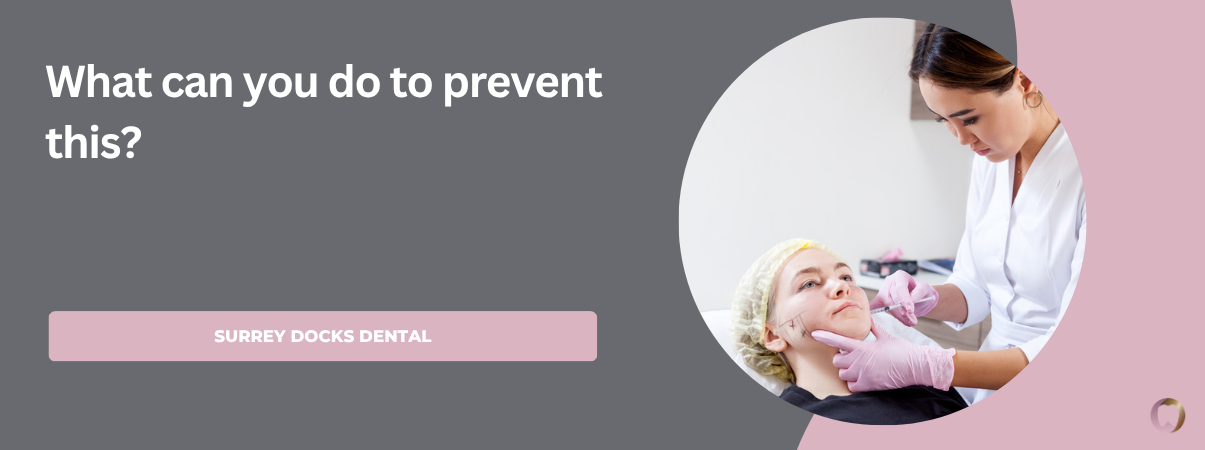
Botox injections may be used to help the jaw muscles to relax, which can bring you some relief while you get to the bottom of your teeth grinding problem. This can also help if you have a prominent jaw line due to teeth grinding. As your jaw relaxes, you’ll find that balance is restored to your facial features.
Summary
Working from home offers many benefits, but it can also make teeth grinding more likely. By recognising the signs early and managing your stress levels, you can avoid long-term damage and maintain a healthier jaw and smile.
Concerned You Might Be Grinding Your Teeth?
If you’re experiencing jaw pain, headaches, or signs of tooth wear, our team at Surrey Docks Dental Centre can help. Book a consultation for personalised treatment or contact us to speak with our friendly team.