Overview: Dental implant treatment is not like other dental procedures. Rather than taking place over a few days or weeks, it takes place over months, with long periods of waiting between treatments. A key part of this treatment plan is that it requires a certain level of flexibility. Some patients heal faster than others, and it’s essential that healing reaches a certain point before the treatment moves forward.
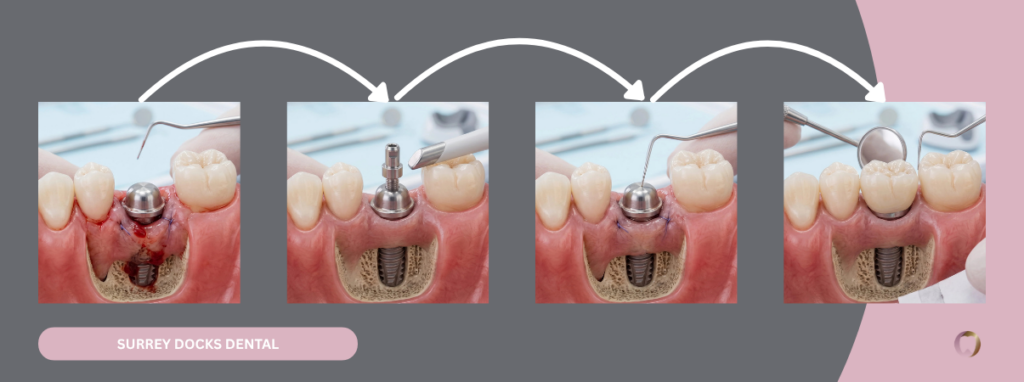
To help patients to understand the treatment plan, we’ve put together this short guide for dental implant recovery times. Remember that these are just a guide, and your own healing journey may be very different. But going into this treatment armed with all of the information will help you to navigate the healing process with ease.
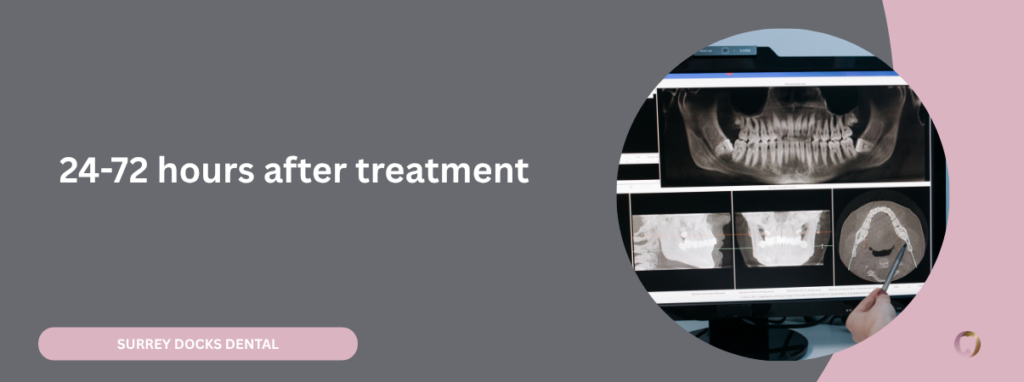
24-72 hours after treatment
Immediately after your dental surgery to place your implants will be the most sensitive time. You’ll need to take it easy for a few days after treatment. Patients compare this stage to the recovery following a tooth extraction.
This is when you’ll experience peak soreness, with swelling and bleeding common. Your dentist may have placed a temporary bridge over the implant site to help prevent accidentally touching the sensitive gum tissue.
You might also experience swelling in your cheek and jaw. During this time, you should take it easy and avoid any strenuous activity. You can take over the counter pain medication to manage the pain.
During this time, you should avoid drinking alcohol and drinking anything through a straw. Stick to soft foods like soup, mashed potato and yoghurt, as these won’t hurt your gums.
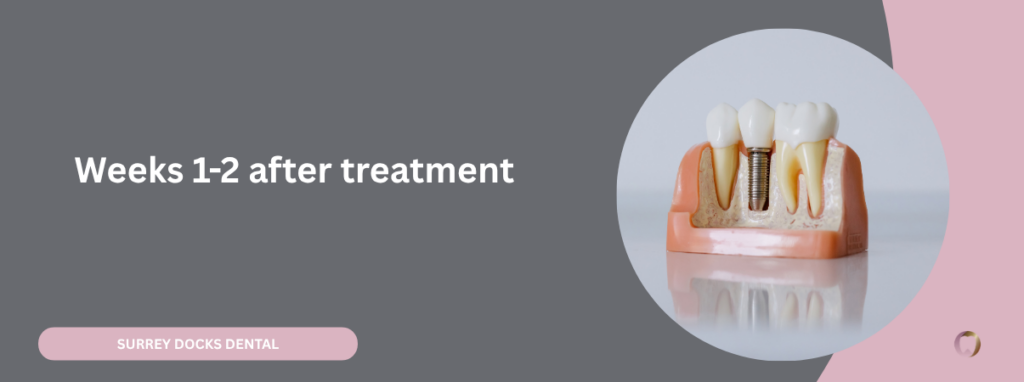
Weeks 1-2 after treatment
In the weeks after the implant placement, your gums will heal over the top of the implant. At this stage, the tenderness and bleeding should have subsided. You might experience a light ache in your jaw bone, similar to a tooth ache.
You’ll be able to resume normal activities, but you’ll need to pay close attention to your oral health during this time. Your dentist will provide instructions for brushing around the implant and caring for your teeth and gums.
If you have any concerns during this time, always contact your dentist for reassurance.
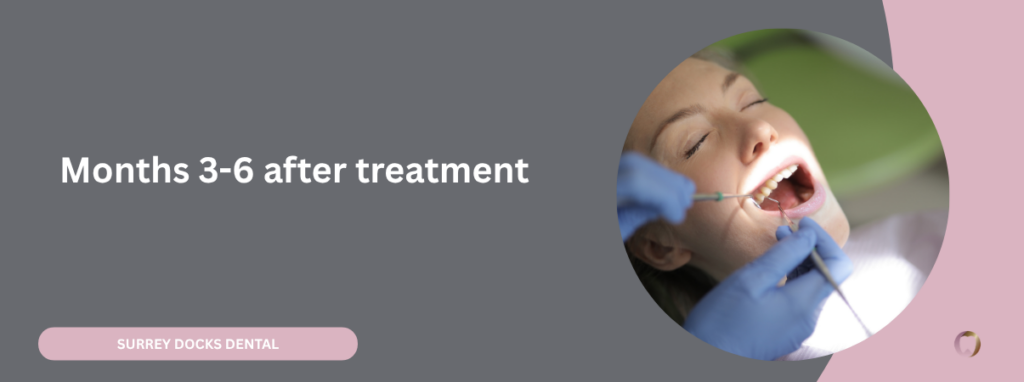
Months 3-6 after treatment
During this stage, the healing will all be happening below the surface and out of sight. This is when the bone integrates with the implant, forming a solid anchor for the restoration. You won’t notice this stage is happening, and you don’t need to do anything except care for your teeth and gums.
Your dentist will invite you for period checkups to monitor the healing process. It’s essential that we don’t place the final crown restoration until the implant has properly integrated with the bone, as this will be a load-bearing crown, and we need to be confident it will be fully supported.
Final stages of treatment
Once your dentist is confident the implant has bonded with the bone, we will expose the top of the implant and attach a healing abutment. This is the first part of the restoration that will sit above the gum line.
You’ll have an additional healing period, but this will only be to wait for the gum to heal around the abutment. This typically takes a few weeks, as gum tissue is a lot quicker to heal then bone.
Once healed, your dentist will fix the crown on top of the abutment and the restoration is complete.

Dental implant aftercare
Aftercare is just as important as the healing process. The biggest risk factor for implant failure would be the presence of bacteria along the gum line. Daily brushing and flossing is therefore essential to help keep your implant healthy.
We also recommend regular dental hygiene cleanings to help remove all traces of plaque and bacteria from between the teeth and along the gum line. This is the best way to protect your implant and avoid conditions that could lead to implant failure.
What will impact implant recovery time?
Implant healing times vary from person to person and it’s difficult to know how long a patient will take to heal. Multiple implants generally take longer to heal than single implants, and implants in the lower jaw tend to heal faster than those in the upper jaw.